
AI-Catheter
A Medical Device in Heart Surgery
Year: 2023
Tools: Rhino, Catia, Keyshot, Photoshop, Adobe Sketchbook Pro
Client: Dr. Ehsan Masoumi
Industrial Designer: Melika Akhteh
Mechanical Engineer: Alireza Heydarian
Problem
Cardiac catheterization is a critical procedure used by cardiologists to evaluate heart function and diagnose cardiovascular conditions. Traditionally, a manual catheter is inserted through an artery or vein and guided to the heart, where it allows for diagnostic tests such as injecting dye for X-ray imaging. However, manual catheters require precise control, which can make the procedure challenging and increase the risk of errors or complications.


Solution
To improve the cardiac catheterization process, we developed a robotic catheter that enhances precision and ease of use. My role in this project was to design an ergonomically optimized handle, ensuring better control and comfort for the operator while making the procedure more efficient and user-friendly.
Ideation
Initially, the client's main goal for the product design was elegance. After exploring several form ideas, I recommended shifting the focus toward ergonomics. As a result, the design direction moved toward creating a comfortable handgrip for users, especially since the primary users are surgeons, and heart surgeries can last several hours. Although a catheter is not used continuously throughout the entire procedure, it is still essential for the device to offer an optimal grip and easy access to all buttons and features.

Refinement
After previous concepts, I was not satisfied with the ergonomics of the handle. Therefore, I decided to use a method that would help me identify the best hand grip based on the comfort level of a surgeons' hand position during surgery.

The best hand position based on the surgeons' posture during surgery.

Using clay to predict and test the whole shape of the handle according to the ergonomics factors.
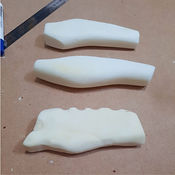
Prototyping different handles using foam based on the clay form.

Coloring hand using black pastel to identify the best hand grip of prototypes and analyze them: The prototype that turned into more black had the best handgrip.

I redesigned the best one to the final shape.
Optimization and Enhancement
Initially, I used Rhino to model concepts but the surface that we needed was too smooth. Therefore, I learned how to model in Catia to achieve the best surface. Some of the specific models that show the progress are provided below:
Revision 2


Revision 1


Revision 3
Revision 3
Revision 4
Revision 5
Revision 6
Revision 7
Revision 8
Revision 9


Stand design


Final prototype

